Omne logo
Omne logo
Omne logo

The Rise of the Performance Restaurant

Five Signals from the NRA Show That Will Shape Foodservice in 2026 and Beyond

The Rise of the Performance Restaurant

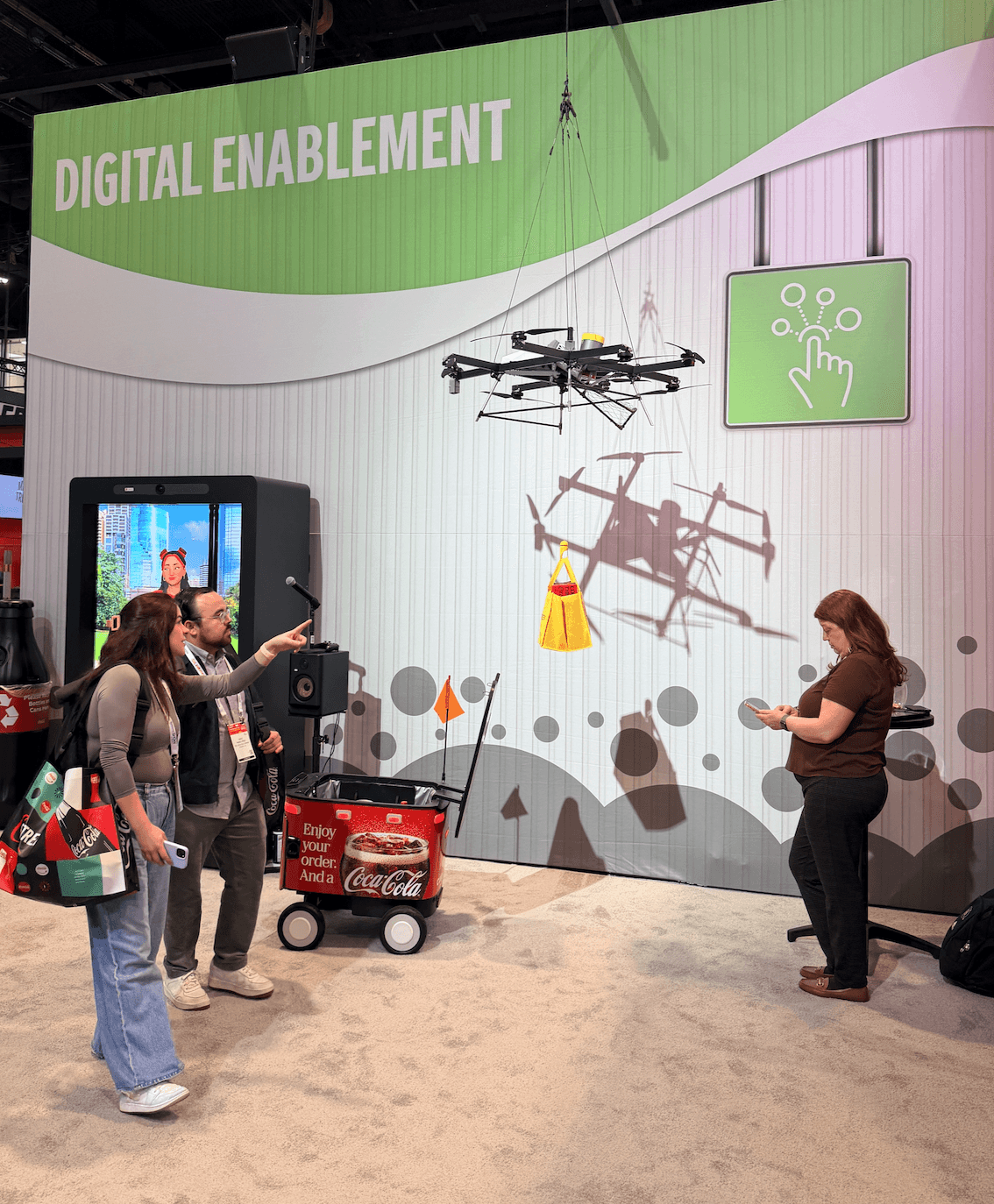
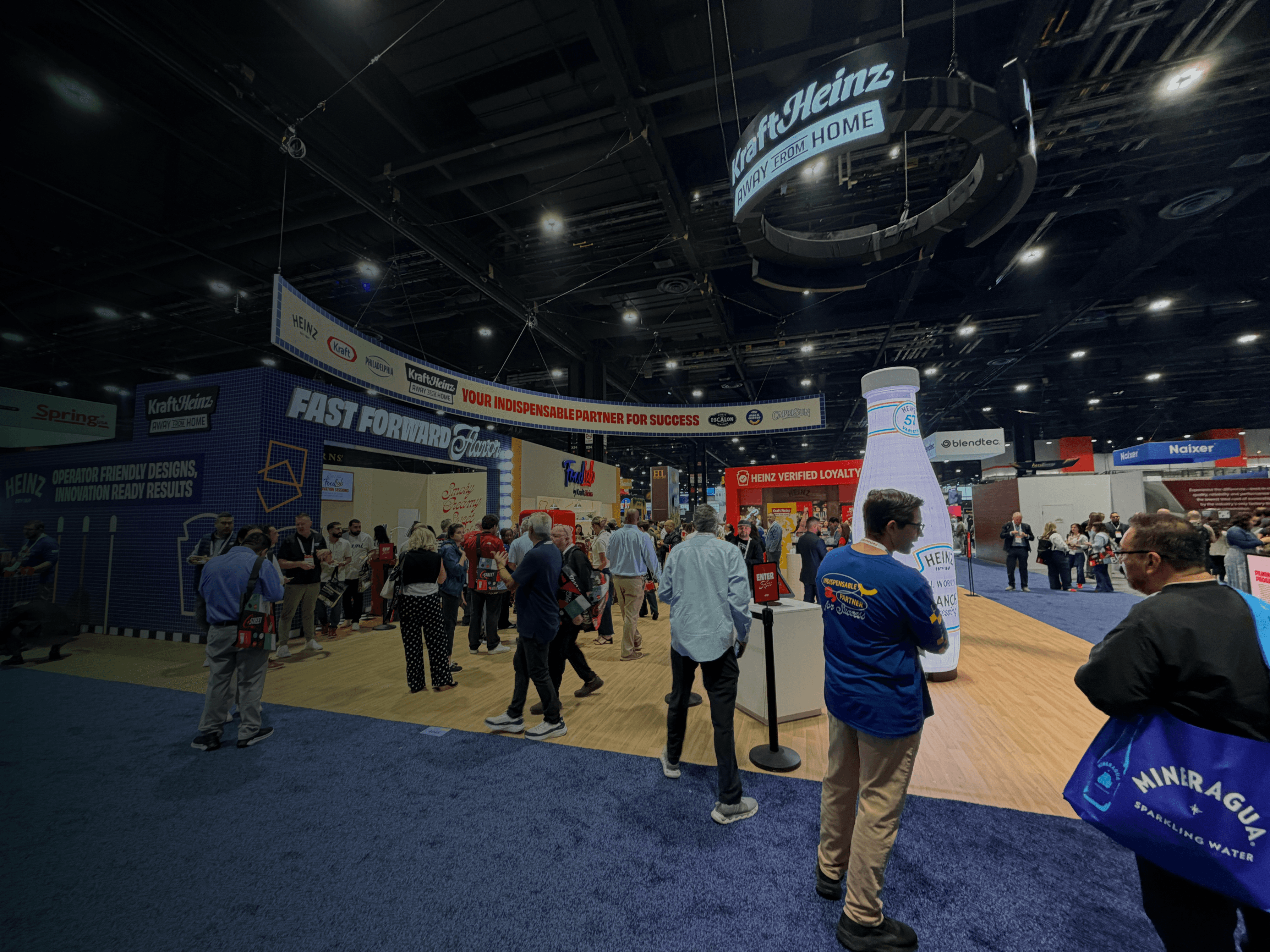
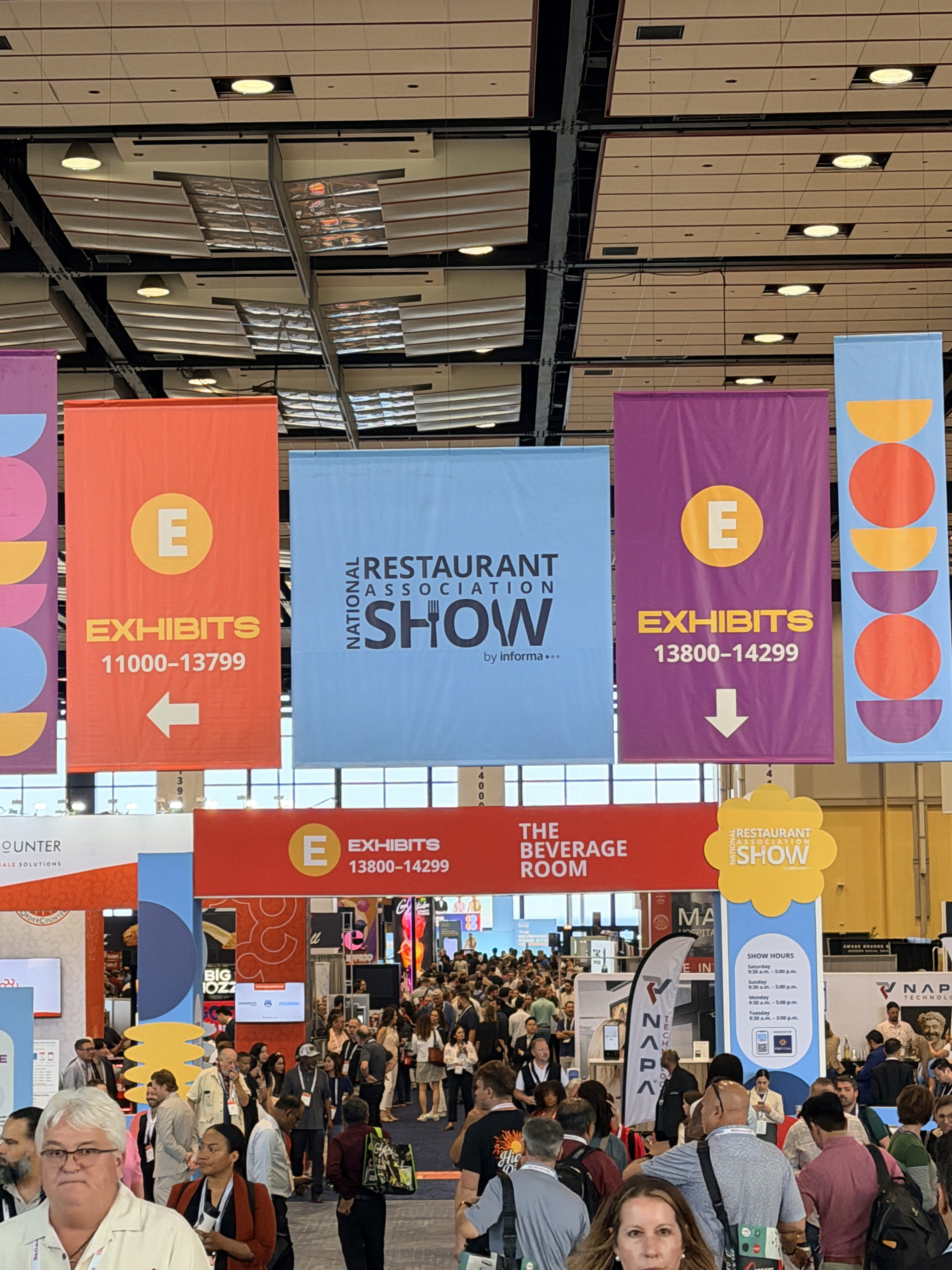
Every year, the National Restaurant Association Show provides a glimpse into where the restaurant industry believes growth will come from next. Across more than 2,000 exhibitors, the strongest innovations were not necessarily the most futuristic or disruptive. Instead, the biggest themes centered around helping operators improve productivity, consistency, profitability and resilience. Put simply, the industry appears to be entering the era of the Performance Restaurant. After several years of inflationary pressure, labor challenges, supply chain disruption and changing consumer behaviors, operators are becoming increasingly selective about where they invest. The question is no longer: “Is this innovative?” It is: “Will this improve business performance?” From AI and automation to menu innovation and sustainability, the most compelling ideas at this year’s NRA Show shared one common characteristic: they delivered measurable operational and commercial value. For foodservice brands, suppliers and operators, five major signals emerged from Chicago that are likely to shape the next phase of restaurant growth.
1. AI Moves from Innovation Project to Performance Driver

Artificial intelligence has been one of the most talked-about topics in hospitality for several years. But the conversation is changing.

While early AI adoption focused heavily on customer-facing applications such as chatbots, ordering assistants and conversational interfaces, the strongest momentum at this year’s NRA Show was firmly focused on operational performance.

Across the exhibition floor, suppliers showcased solutions designed to improve consistency, reduce waste and optimise labor deployment.

Key applications included:

  • AI-assisted cooking systems

  • Kitchen monitoring platforms

  • Predictive food preparation tools

  • Food waste analytics

  • Automated food safety compliance

  • Labor optimisation software

Companies such as Metafoodx demonstrated real-time food tracking and waste analysis systems capable of identifying losses at an ingredient level, while robotics providers focused on throughput, reliability and consistency rather than headline-grabbing demonstrations.

This reflects a significant shift in mindset. The industry is no longer asking whether AI can work in restaurants. Instead, operators are asking which AI applications can deliver measurable business value within the next twelve months.

Technology investments are increasingly being judged against metrics such as labor efficiency, food waste reduction, food quality and margin improvement.
The age of restaurant AI pilots is coming to an end - the era of restaurant AI performance is beginning.

2. Workforce Flexibility Becomes an Operational Advantage

Labour continues to be one of the most significant variables influencing restaurant performance.

What stood out across this year’s show was the extent to which equipment manufacturers and technology providers are designing solutions around workforce flexibility and operational consistency.

The show floor featured a broad range of innovations focused on simplifying operations, reducing complexity and enabling teams to perform effectively regardless of staffing challenges.

Examples included:

  • Automated fryer systems

  • Smart holding equipment

  • Self-cleaning technology

  • Voice ordering platforms

  • Food preparation automation

  • Simplified cross-training systems

  • Faster employee onboarding tools

The National Restaurant Association’s Kitchen Innovations Awards reflected a similar trend, with many winners focused on helping operators create more productive and resilient operations.

Importantly, the narrative around automation has evolved. Just a few years ago, automation was often positioned as innovation. Today, it is increasingly positioned as operational enablement. Restaurants are designing businesses around the realities of rising wage costs, dynamic staffing requirements, ongoing recruitment challenges and the need for faster onboarding.

The future kitchen is not necessarily one with fewer people. It’s one designed to perform consistently across a wider range of staffing scenarios. For operators, workforce flexibility is becoming a competitive advantage.

3. The Era of Affordable Adventure Dining

While operational performance dominated many conversations, consumer demand remains the ultimate driver of restaurant success.
One of the clearest insights from both exhibitors and industry forecasts was the evolution of menu innovation.

Consumers still want discovery.

They still seek excitement.

They still respond to new flavours and experiences.

However, increasingly they want those experiences delivered through formats that feel familiar, accessible and value-driven. Across the show floor, menu innovation consistently balanced novelty with reassurance.

Popular themes included:

  • Smash burgers

  • Comfort food formats

  • Global comfort-food mashups

  • Protein-led menu innovation

  • Low and no-alcohol beverages

  • Versatile ingredients with multiple menu applications

Rather than introducing entirely unfamiliar concepts, operators are layering innovation onto formats consumers already know and trust. Examples included Korean BBQ-inspired burgers, globally influenced sauces on familiar proteins and premium fast-casual interpretations of classic menu favourites.

The National Restaurant Association’s forecasts repeatedly point towards a combination of comfort and value as key drivers of consumer behaviour moving towards 2027. 

Consumers remain open to experimentation, but they increasingly want confidence that an experience will deliver satisfaction. The result is what might best be described as affordable adventure dining-innovation that feels exciting without feeling risky.

4. Sustainability Becomes a Performance Multiplier

Sustainability remained a major theme throughout the NRA Show, but the way operators are evaluating sustainability initiatives continues to evolve. Historically, sustainability conversations often focused on corporate responsibility, environmental commitments and ESG objectives. Today, sustainability is increasingly being viewed through the lens of business performance.

Many of the fastest-growing sustainability-focused solutions showcased in Chicago were directly linked to operational outcomes, including:

  • Food waste reduction

  • Energy efficiency

  • Packaging optimisation

  • Water usage reduction

  • Inventory visibility

  • Shelf-life extension

As operators continue to focus on profitability and efficiency, sustainability investments are increasingly expected to deliver commercial benefits alongside environmental impact.

The most compelling sustainability proposition is no longer simply: “This helps the planet.” It's: “This helps the planet and improves business performance.”

That shift is accelerating adoption. Operators are embracing sustainability initiatives because they reduce waste, improve efficiency and create measurable financial benefits. Sustainability has not become less important - It’s become more commercially integrated.

5. Operational Excellence Emerges as a Competitive Advantage

Perhaps the most significant takeaway from Chicago was not a specific technology, product category or menu trend. It was a shift in mindset.

Across operator conversations, exhibitor presentations and wider industry commentary, there was a growing emphasis on simplicity, consistency and operational excellence. Repeatedly, discussions centered around:

  • Operational simplicity

  • Systems integration

  • Reliable menu performers

  • Equipment ROI

  • Process consistency

  • Practical technology

There was noticeably less enthusiasm for complexity and significantly more interest in solutions that make businesses easier to run, easier to scale and easier to manage. This reflects a broader evolution in how operators evaluate opportunities. The industry’s most successful businesses may not necessarily be those introducing the most concepts or chasing the most trends. Increasingly, they are the businesses that execute consistently, improve productivity and create dependable guest experiences.

In many ways, operational excellence is becoming one of the most valuable competitive advantages in foodservice.

What This Means for Foodservice Brands

The clearest message from the NRA Show wasn’t that restaurants are becoming more cautious, it’s that they are becoming more selective.

Operators continue to invest, innovate and evolve, but innovation is increasingly being judged by its contribution to business performance.

Technology must demonstrate measurable value.

Menu innovation must balance excitement with familiarity.

Sustainability initiatives must support both environmental and commercial objectives, and operational simplicity is increasingly viewed as a strategic advantage.

The future restaurant may not necessarily be more futuristic, but it will almost certainly be more performance-driven. For foodservice brands, suppliers and operators, the opportunity is clear. The next generation of growth will belong to those who help the industry become smarter, more efficient and more operationally intelligent.

Because the defining question emerging from Chicago is no longer, “What’s new?” It’s “What works?”

And increasingly, the winners will be those who can prove it.
More articles

Your brand is more famous than your competitors… So what?

When was the last time you reviewed your campaign messaging or comms strategy and asked yourself, “So what?”

Far from a churlish response to a new idea, the “so what?” test is perhaps the most important marketing interrogation of all. It acts as a clear-eyed assessment of whether the market truly understands why your brand matters and how it helps operators perform. By scrutinising campaigns with our audience's perspective in mind, we can cut the fluff, prioritise actionable benefits and highlight the true value of our messages.  But has modern foodservice forgotten its importance? 

Your brand is more famous than your competitors… So what?

When was the last time you reviewed your campaign messaging or comms strategy and asked yourself, “So what?”

Your brand is more famous than your competitors… So what?
When was the last time you reviewed your campaign messaging or comms strategy and asked yourself, “So what?”

Download

Why most foodservice growth strategies will fail in 2026

And how yours can succeed

Most foodservice growth strategies will fail in 2026. Not because of a lack of investment. Or ambition, but because the market has structurally changed – and too many strategies haven’t changed with it.

Download

Why most foodservice growth strategies will fail in 2026

And how yours can succeed

Why most foodservice growth strategies will fail in 2026
And how yours can succeed
Crispy avocado and poached egg on a Strong Roots cauliflower hash brown, topped with fresh greens, salsa, and creamy drizzle, served with lime and dipping sauce on a vibrant restaurant table

From consumer trends to operator value: How top brands stay relevant

From plant-based burgers to a UPF backlash. Protein shakes to whole-food simplicity. Sugar-free sweeteners to ‘treat culture’. The UK’s food and drink habits are constantly changing, often contradictory and - without the right data - rarely predictable.

Crispy avocado and poached egg on a Strong Roots cauliflower hash brown, topped with fresh greens, salsa, and creamy drizzle, served with lime and dipping sauce on a vibrant restaurant table
From consumer trends to operator value: How top brands stay relevant

Crispy avocado and poached egg on a Strong Roots cauliflower hash brown, topped with fresh greens, salsa, and creamy drizzle, served with lime and dipping sauce on a vibrant restaurant table
From consumer trends to operator value: How top brands stay relevant
Chef in kitchen

Three pillars behind award-winning growth in the AFH channel

In today’s ultra-competitive foodservice market, almost every supplier is investing in a growth strategy, but with mixed success. Despite sinking budget into more data, more campaigns and more sales activity, growth, for many, is stalling. 

Chef in kitchen
Three pillars behind award-winning growth in the AFH channel

Chef in kitchen
Three pillars behind award-winning growth in the AFH channel
People laughing at a restaurant table with a green digital network overlay

Is your brand standing out early enough in the buyer’s journey?

From McCain to Oreo, B2C’s biggest food and drink brands have long sold one idea: we’re the only choice for you. It’s brand marketing at its best - sustained, consistent messaging that builds trust and preference way ahead of a purchase decision.

People laughing at a restaurant table with a green digital network overlay
Is your brand standing out early enough in the buyer’s journey?

People laughing at a restaurant table with a green digital network overlay
Is your brand standing out early enough in the buyer’s journey?
Omne logo
Omne logo
Omne logo

The Rise of the Performance Restaurant

Five Signals from the NRA Show That Will Shape Foodservice in 2026 and Beyond

The Rise of the Performance Restaurant

Every year, the National Restaurant Association Show provides a glimpse into where the restaurant industry believes growth will come from next. Across more than 2,000 exhibitors, the strongest innovations were not necessarily the most futuristic or disruptive. Instead, the biggest themes centered around helping operators improve productivity, consistency, profitability and resilience. Put simply, the industry appears to be entering the era of the Performance Restaurant. After several years of inflationary pressure, labor challenges, supply chain disruption and changing consumer behaviors, operators are becoming increasingly selective about where they invest. The question is no longer: “Is this innovative?” It is: “Will this improve business performance?” From AI and automation to menu innovation and sustainability, the most compelling ideas at this year’s NRA Show shared one common characteristic: they delivered measurable operational and commercial value. For foodservice brands, suppliers and operators, five major signals emerged from Chicago that are likely to shape the next phase of restaurant growth.

1. AI Moves from Innovation Project to Performance Driver

Artificial intelligence has been one of the most talked-about topics in hospitality for several years. But the conversation is changing.

While early AI adoption focused heavily on customer-facing applications such as chatbots, ordering assistants and conversational interfaces, the strongest momentum at this year’s NRA Show was firmly focused on operational performance.

Across the exhibition floor, suppliers showcased solutions designed to improve consistency, reduce waste and optimise labor deployment.

Key applications included:

  • AI-assisted cooking systems

  • Kitchen monitoring platforms

  • Predictive food preparation tools

  • Food waste analytics

  • Automated food safety compliance

  • Labor optimisation software

Companies such as Metafoodx demonstrated real-time food tracking and waste analysis systems capable of identifying losses at an ingredient level, while robotics providers focused on throughput, reliability and consistency rather than headline-grabbing demonstrations.

This reflects a significant shift in mindset. The industry is no longer asking whether AI can work in restaurants. Instead, operators are asking which AI applications can deliver measurable business value within the next twelve months.

Technology investments are increasingly being judged against metrics such as labor efficiency, food waste reduction, food quality and margin improvement.
The age of restaurant AI pilots is coming to an end - the era of restaurant AI performance is beginning.

2. Workforce Flexibility Becomes an Operational Advantage

Labour continues to be one of the most significant variables influencing restaurant performance.

What stood out across this year’s show was the extent to which equipment manufacturers and technology providers are designing solutions around workforce flexibility and operational consistency.

The show floor featured a broad range of innovations focused on simplifying operations, reducing complexity and enabling teams to perform effectively regardless of staffing challenges.

Examples included:

  • Automated fryer systems

  • Smart holding equipment

  • Self-cleaning technology

  • Voice ordering platforms

  • Food preparation automation

  • Simplified cross-training systems

  • Faster employee onboarding tools

The National Restaurant Association’s Kitchen Innovations Awards reflected a similar trend, with many winners focused on helping operators create more productive and resilient operations.

Importantly, the narrative around automation has evolved. Just a few years ago, automation was often positioned as innovation. Today, it is increasingly positioned as operational enablement. Restaurants are designing businesses around the realities of rising wage costs, dynamic staffing requirements, ongoing recruitment challenges and the need for faster onboarding.

The future kitchen is not necessarily one with fewer people. It’s one designed to perform consistently across a wider range of staffing scenarios. For operators, workforce flexibility is becoming a competitive advantage.

3. The Era of Affordable Adventure Dining

While operational performance dominated many conversations, consumer demand remains the ultimate driver of restaurant success.
One of the clearest insights from both exhibitors and industry forecasts was the evolution of menu innovation.

Consumers still want discovery.

They still seek excitement.

They still respond to new flavours and experiences.

However, increasingly they want those experiences delivered through formats that feel familiar, accessible and value-driven. Across the show floor, menu innovation consistently balanced novelty with reassurance.

Popular themes included:

  • Smash burgers

  • Comfort food formats

  • Global comfort-food mashups

  • Protein-led menu innovation

  • Low and no-alcohol beverages

  • Versatile ingredients with multiple menu applications

Rather than introducing entirely unfamiliar concepts, operators are layering innovation onto formats consumers already know and trust. Examples included Korean BBQ-inspired burgers, globally influenced sauces on familiar proteins and premium fast-casual interpretations of classic menu favourites.

The National Restaurant Association’s forecasts repeatedly point towards a combination of comfort and value as key drivers of consumer behaviour moving towards 2027. 

Consumers remain open to experimentation, but they increasingly want confidence that an experience will deliver satisfaction. The result is what might best be described as affordable adventure dining-innovation that feels exciting without feeling risky.

4. Sustainability Becomes a Performance Multiplier

Sustainability remained a major theme throughout the NRA Show, but the way operators are evaluating sustainability initiatives continues to evolve. Historically, sustainability conversations often focused on corporate responsibility, environmental commitments and ESG objectives. Today, sustainability is increasingly being viewed through the lens of business performance.

Many of the fastest-growing sustainability-focused solutions showcased in Chicago were directly linked to operational outcomes, including:

  • Food waste reduction

  • Energy efficiency

  • Packaging optimisation

  • Water usage reduction

  • Inventory visibility

  • Shelf-life extension

As operators continue to focus on profitability and efficiency, sustainability investments are increasingly expected to deliver commercial benefits alongside environmental impact.

The most compelling sustainability proposition is no longer simply: “This helps the planet.” It's: “This helps the planet and improves business performance.”

That shift is accelerating adoption. Operators are embracing sustainability initiatives because they reduce waste, improve efficiency and create measurable financial benefits. Sustainability has not become less important - It’s become more commercially integrated.

5. Operational Excellence Emerges as a Competitive Advantage

Perhaps the most significant takeaway from Chicago was not a specific technology, product category or menu trend. It was a shift in mindset.

Across operator conversations, exhibitor presentations and wider industry commentary, there was a growing emphasis on simplicity, consistency and operational excellence. Repeatedly, discussions centered around:

  • Operational simplicity

  • Systems integration

  • Reliable menu performers

  • Equipment ROI

  • Process consistency

  • Practical technology

There was noticeably less enthusiasm for complexity and significantly more interest in solutions that make businesses easier to run, easier to scale and easier to manage. This reflects a broader evolution in how operators evaluate opportunities. The industry’s most successful businesses may not necessarily be those introducing the most concepts or chasing the most trends. Increasingly, they are the businesses that execute consistently, improve productivity and create dependable guest experiences.

In many ways, operational excellence is becoming one of the most valuable competitive advantages in foodservice.

What This Means for Foodservice Brands

The clearest message from the NRA Show wasn’t that restaurants are becoming more cautious, it’s that they are becoming more selective.

Operators continue to invest, innovate and evolve, but innovation is increasingly being judged by its contribution to business performance.

Technology must demonstrate measurable value.

Menu innovation must balance excitement with familiarity.

Sustainability initiatives must support both environmental and commercial objectives, and operational simplicity is increasingly viewed as a strategic advantage.

The future restaurant may not necessarily be more futuristic, but it will almost certainly be more performance-driven. For foodservice brands, suppliers and operators, the opportunity is clear. The next generation of growth will belong to those who help the industry become smarter, more efficient and more operationally intelligent.

Because the defining question emerging from Chicago is no longer, “What’s new?” It’s “What works?”

And increasingly, the winners will be those who can prove it.
More articles

Your brand is more famous than your competitors… So what?

When was the last time you reviewed your campaign messaging or comms strategy and asked yourself, “So what?”

Far from a churlish response to a new idea, the “so what?” test is perhaps the most important marketing interrogation of all. It acts as a clear-eyed assessment of whether the market truly understands why your brand matters and how it helps operators perform. By scrutinising campaigns with our audience's perspective in mind, we can cut the fluff, prioritise actionable benefits and highlight the true value of our messages.  But has modern foodservice forgotten its importance? 

Your brand is more famous than your competitors… So what?

When was the last time you reviewed your campaign messaging or comms strategy and asked yourself, “So what?”

Your brand is more famous than your competitors… So what?
When was the last time you reviewed your campaign messaging or comms strategy and asked yourself, “So what?”

Download

Why most foodservice growth strategies will fail in 2026

And how yours can succeed

Most foodservice growth strategies will fail in 2026. Not because of a lack of investment. Or ambition, but because the market has structurally changed – and too many strategies haven’t changed with it.

Download

Why most foodservice growth strategies will fail in 2026

And how yours can succeed

Why most foodservice growth strategies will fail in 2026
And how yours can succeed
Crispy avocado and poached egg on a Strong Roots cauliflower hash brown, topped with fresh greens, salsa, and creamy drizzle, served with lime and dipping sauce on a vibrant restaurant table

From consumer trends to operator value: How top brands stay relevant

From plant-based burgers to a UPF backlash. Protein shakes to whole-food simplicity. Sugar-free sweeteners to ‘treat culture’. The UK’s food and drink habits are constantly changing, often contradictory and - without the right data - rarely predictable.

Crispy avocado and poached egg on a Strong Roots cauliflower hash brown, topped with fresh greens, salsa, and creamy drizzle, served with lime and dipping sauce on a vibrant restaurant table
From consumer trends to operator value: How top brands stay relevant

Crispy avocado and poached egg on a Strong Roots cauliflower hash brown, topped with fresh greens, salsa, and creamy drizzle, served with lime and dipping sauce on a vibrant restaurant table
From consumer trends to operator value: How top brands stay relevant
Chef in kitchen

Three pillars behind award-winning growth in the AFH channel

In today’s ultra-competitive foodservice market, almost every supplier is investing in a growth strategy, but with mixed success. Despite sinking budget into more data, more campaigns and more sales activity, growth, for many, is stalling. 

Chef in kitchen
Three pillars behind award-winning growth in the AFH channel

Chef in kitchen
Three pillars behind award-winning growth in the AFH channel
People laughing at a restaurant table with a green digital network overlay

Is your brand standing out early enough in the buyer’s journey?

From McCain to Oreo, B2C’s biggest food and drink brands have long sold one idea: we’re the only choice for you. It’s brand marketing at its best - sustained, consistent messaging that builds trust and preference way ahead of a purchase decision.

People laughing at a restaurant table with a green digital network overlay
Is your brand standing out early enough in the buyer’s journey?

People laughing at a restaurant table with a green digital network overlay
Is your brand standing out early enough in the buyer’s journey?
Omne logo
Omne logo
Omne logo

The Rise of the Performance Restaurant

Five Signals from the NRA Show That Will Shape Foodservice in 2026 and Beyond

The Rise of the Performance Restaurant

Every year, the National Restaurant Association Show provides a glimpse into where the restaurant industry believes growth will come from next. Across more than 2,000 exhibitors, the strongest innovations were not necessarily the most futuristic or disruptive. Instead, the biggest themes centered around helping operators improve productivity, consistency, profitability and resilience. Put simply, the industry appears to be entering the era of the Performance Restaurant. After several years of inflationary pressure, labor challenges, supply chain disruption and changing consumer behaviors, operators are becoming increasingly selective about where they invest. The question is no longer: “Is this innovative?” It is: “Will this improve business performance?” From AI and automation to menu innovation and sustainability, the most compelling ideas at this year’s NRA Show shared one common characteristic: they delivered measurable operational and commercial value. For foodservice brands, suppliers and operators, five major signals emerged from Chicago that are likely to shape the next phase of restaurant growth.

1. AI Moves from Innovation Project to Performance Driver

Artificial intelligence has been one of the most talked-about topics in hospitality for several years. But the conversation is changing.

While early AI adoption focused heavily on customer-facing applications such as chatbots, ordering assistants and conversational interfaces, the strongest momentum at this year’s NRA Show was firmly focused on operational performance.

Across the exhibition floor, suppliers showcased solutions designed to improve consistency, reduce waste and optimise labor deployment.

Key applications included:

  • AI-assisted cooking systems

  • Kitchen monitoring platforms

  • Predictive food preparation tools

  • Food waste analytics

  • Automated food safety compliance

  • Labor optimisation software

Companies such as Metafoodx demonstrated real-time food tracking and waste analysis systems capable of identifying losses at an ingredient level, while robotics providers focused on throughput, reliability and consistency rather than headline-grabbing demonstrations.

This reflects a significant shift in mindset. The industry is no longer asking whether AI can work in restaurants. Instead, operators are asking which AI applications can deliver measurable business value within the next twelve months.

Technology investments are increasingly being judged against metrics such as labor efficiency, food waste reduction, food quality and margin improvement.
The age of restaurant AI pilots is coming to an end - the era of restaurant AI performance is beginning.

2. Workforce Flexibility Becomes an Operational Advantage

Labour continues to be one of the most significant variables influencing restaurant performance.

What stood out across this year’s show was the extent to which equipment manufacturers and technology providers are designing solutions around workforce flexibility and operational consistency.

The show floor featured a broad range of innovations focused on simplifying operations, reducing complexity and enabling teams to perform effectively regardless of staffing challenges.

Examples included:

  • Automated fryer systems

  • Smart holding equipment

  • Self-cleaning technology

  • Voice ordering platforms

  • Food preparation automation

  • Simplified cross-training systems

  • Faster employee onboarding tools

The National Restaurant Association’s Kitchen Innovations Awards reflected a similar trend, with many winners focused on helping operators create more productive and resilient operations.

Importantly, the narrative around automation has evolved. Just a few years ago, automation was often positioned as innovation. Today, it is increasingly positioned as operational enablement. Restaurants are designing businesses around the realities of rising wage costs, dynamic staffing requirements, ongoing recruitment challenges and the need for faster onboarding.

The future kitchen is not necessarily one with fewer people. It’s one designed to perform consistently across a wider range of staffing scenarios. For operators, workforce flexibility is becoming a competitive advantage.

3. The Era of Affordable Adventure Dining

While operational performance dominated many conversations, consumer demand remains the ultimate driver of restaurant success.
One of the clearest insights from both exhibitors and industry forecasts was the evolution of menu innovation.

Consumers still want discovery.

They still seek excitement.

They still respond to new flavours and experiences.

However, increasingly they want those experiences delivered through formats that feel familiar, accessible and value-driven. Across the show floor, menu innovation consistently balanced novelty with reassurance.

Popular themes included:

  • Smash burgers

  • Comfort food formats

  • Global comfort-food mashups

  • Protein-led menu innovation

  • Low and no-alcohol beverages

  • Versatile ingredients with multiple menu applications

Rather than introducing entirely unfamiliar concepts, operators are layering innovation onto formats consumers already know and trust. Examples included Korean BBQ-inspired burgers, globally influenced sauces on familiar proteins and premium fast-casual interpretations of classic menu favourites.

The National Restaurant Association’s forecasts repeatedly point towards a combination of comfort and value as key drivers of consumer behaviour moving towards 2027. 

Consumers remain open to experimentation, but they increasingly want confidence that an experience will deliver satisfaction. The result is what might best be described as affordable adventure dining-innovation that feels exciting without feeling risky.

4. Sustainability Becomes a Performance Multiplier

Sustainability remained a major theme throughout the NRA Show, but the way operators are evaluating sustainability initiatives continues to evolve. Historically, sustainability conversations often focused on corporate responsibility, environmental commitments and ESG objectives. Today, sustainability is increasingly being viewed through the lens of business performance.

Many of the fastest-growing sustainability-focused solutions showcased in Chicago were directly linked to operational outcomes, including:

  • Food waste reduction

  • Energy efficiency

  • Packaging optimisation

  • Water usage reduction

  • Inventory visibility

  • Shelf-life extension

As operators continue to focus on profitability and efficiency, sustainability investments are increasingly expected to deliver commercial benefits alongside environmental impact.

The most compelling sustainability proposition is no longer simply: “This helps the planet.” It's: “This helps the planet and improves business performance.”

That shift is accelerating adoption. Operators are embracing sustainability initiatives because they reduce waste, improve efficiency and create measurable financial benefits. Sustainability has not become less important - It’s become more commercially integrated.

5. Operational Excellence Emerges as a Competitive Advantage

Perhaps the most significant takeaway from Chicago was not a specific technology, product category or menu trend. It was a shift in mindset.

Across operator conversations, exhibitor presentations and wider industry commentary, there was a growing emphasis on simplicity, consistency and operational excellence. Repeatedly, discussions centered around:

  • Operational simplicity

  • Systems integration

  • Reliable menu performers

  • Equipment ROI

  • Process consistency

  • Practical technology

There was noticeably less enthusiasm for complexity and significantly more interest in solutions that make businesses easier to run, easier to scale and easier to manage. This reflects a broader evolution in how operators evaluate opportunities. The industry’s most successful businesses may not necessarily be those introducing the most concepts or chasing the most trends. Increasingly, they are the businesses that execute consistently, improve productivity and create dependable guest experiences.

In many ways, operational excellence is becoming one of the most valuable competitive advantages in foodservice.

What This Means for Foodservice Brands

The clearest message from the NRA Show wasn’t that restaurants are becoming more cautious, it’s that they are becoming more selective.

Operators continue to invest, innovate and evolve, but innovation is increasingly being judged by its contribution to business performance.

Technology must demonstrate measurable value.

Menu innovation must balance excitement with familiarity.

Sustainability initiatives must support both environmental and commercial objectives, and operational simplicity is increasingly viewed as a strategic advantage.

The future restaurant may not necessarily be more futuristic, but it will almost certainly be more performance-driven. For foodservice brands, suppliers and operators, the opportunity is clear. The next generation of growth will belong to those who help the industry become smarter, more efficient and more operationally intelligent.

Because the defining question emerging from Chicago is no longer, “What’s new?” It’s “What works?”

And increasingly, the winners will be those who can prove it.

More articles

Your brand is more famous than your competitors… So what?

When was the last time you reviewed your campaign messaging or comms strategy and asked yourself, “So what?”

Far from a churlish response to a new idea, the “so what?” test is perhaps the most important marketing interrogation of all. It acts as a clear-eyed assessment of whether the market truly understands why your brand matters and how it helps operators perform. By scrutinising campaigns with our audience's perspective in mind, we can cut the fluff, prioritise actionable benefits and highlight the true value of our messages.  But has modern foodservice forgotten its importance? 

Your brand is more famous than your competitors… So what?

When was the last time you reviewed your campaign messaging or comms strategy and asked yourself, “So what?”

Your brand is more famous than your competitors… So what?
When was the last time you reviewed your campaign messaging or comms strategy and asked yourself, “So what?”

Download

Why most foodservice growth strategies will fail in 2026

And how yours can succeed

Most foodservice growth strategies will fail in 2026. Not because of a lack of investment. Or ambition, but because the market has structurally changed – and too many strategies haven’t changed with it.

Download

Why most foodservice growth strategies will fail in 2026

And how yours can succeed

Why most foodservice growth strategies will fail in 2026
And how yours can succeed
Crispy avocado and poached egg on a Strong Roots cauliflower hash brown, topped with fresh greens, salsa, and creamy drizzle, served with lime and dipping sauce on a vibrant restaurant table

From consumer trends to operator value: How top brands stay relevant

From plant-based burgers to a UPF backlash. Protein shakes to whole-food simplicity. Sugar-free sweeteners to ‘treat culture’. The UK’s food and drink habits are constantly changing, often contradictory and - without the right data - rarely predictable.

Crispy avocado and poached egg on a Strong Roots cauliflower hash brown, topped with fresh greens, salsa, and creamy drizzle, served with lime and dipping sauce on a vibrant restaurant table
From consumer trends to operator value: How top brands stay relevant

Crispy avocado and poached egg on a Strong Roots cauliflower hash brown, topped with fresh greens, salsa, and creamy drizzle, served with lime and dipping sauce on a vibrant restaurant table
From consumer trends to operator value: How top brands stay relevant
Chef in kitchen

Three pillars behind award-winning growth in the AFH channel

In today’s ultra-competitive foodservice market, almost every supplier is investing in a growth strategy, but with mixed success. Despite sinking budget into more data, more campaigns and more sales activity, growth, for many, is stalling. 

Chef in kitchen
Three pillars behind award-winning growth in the AFH channel

Chef in kitchen
Three pillars behind award-winning growth in the AFH channel
People laughing at a restaurant table with a green digital network overlay

Is your brand standing out early enough in the buyer’s journey?

From McCain to Oreo, B2C’s biggest food and drink brands have long sold one idea: we’re the only choice for you. It’s brand marketing at its best - sustained, consistent messaging that builds trust and preference way ahead of a purchase decision.

People laughing at a restaurant table with a green digital network overlay
Is your brand standing out early enough in the buyer’s journey?

People laughing at a restaurant table with a green digital network overlay
Is your brand standing out early enough in the buyer’s journey?